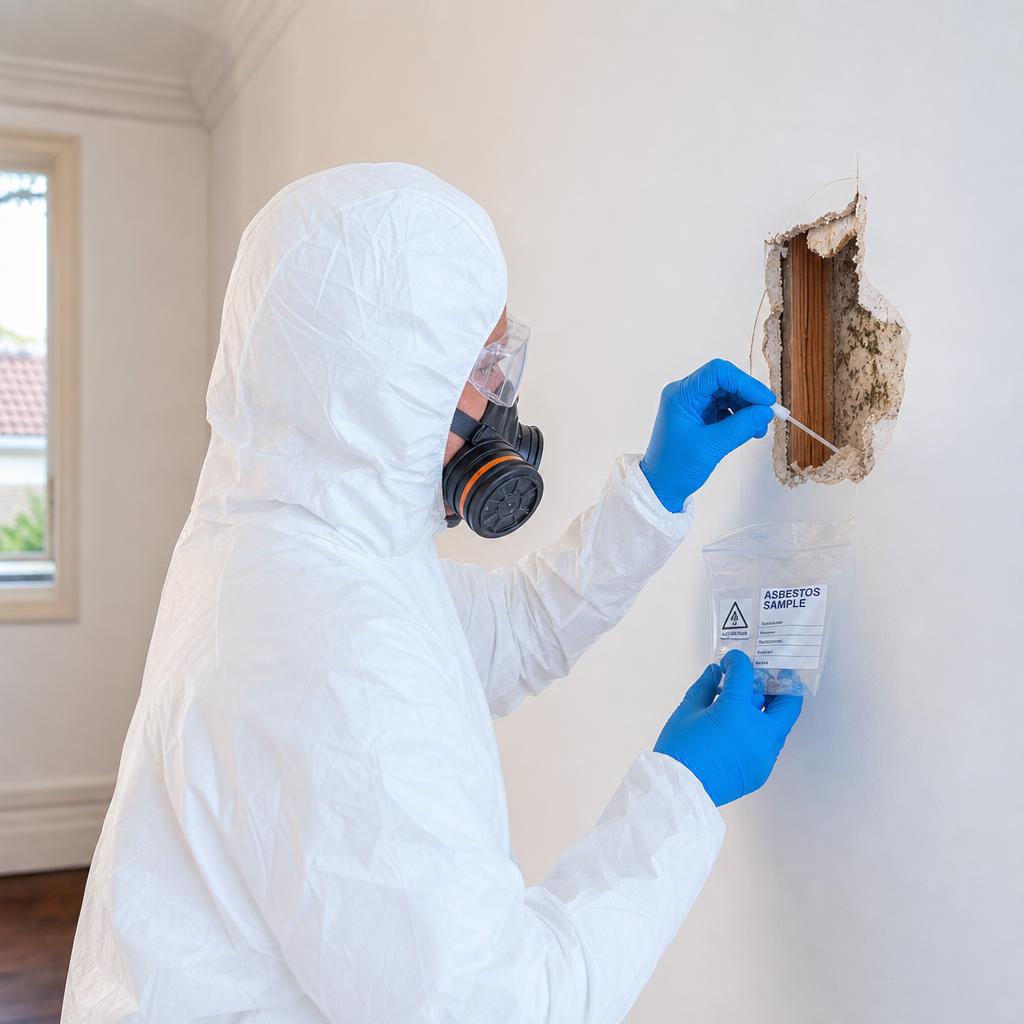
Asbestos Testing and Inspection in Perth
Professional sampling, lab analysis, and clearance certificates by licensed asbestos assessors.
Class A & Class B Licensed · WorkSafe Compliant · Free On-Site Quotes · Clearance Docs Included
Request a Free On-Site Quote
Leave your details and we'll be in touch to discuss your project.
When Should You Test for Asbestos?
Perth Asbestos Removals arranges asbestos sampling, laboratory analysis and clearance inspections across the Perth metro. If your Perth property was built before 1990, asbestos-containing materials may be present in the roofing, fencing, wall linings, eaves, or floor coverings. If you need a survey of the whole property rather than confirmation of one specific material, see our asbestos assessment page. Many homeowners are unaware that their property contains asbestos until they plan a renovation or notice deteriorating materials.
Testing is the only reliable way to confirm whether a suspected material contains asbestos. Visual identification alone is not sufficient, and guessing incorrectly can have serious consequences.
Before Renovating
Any work that disturbs walls, ceilings, floors, roof sheeting, or eaves in a pre-1990 home should be preceded by asbestos testing. Sanding, drilling, or cutting asbestos materials releases fibres.
Before Purchasing
A pre-purchase asbestos inspection gives buyers a clear picture of what is present, where it is, and what condition it is in. This can inform negotiations and renovation planning.
Suspected or Damaged Material
If you notice crumbling, cracked, or damaged material that may be asbestos, do not disturb it. Have it tested first before any work proceeds.
After Removal
A clearance inspection after removal confirms the area is safe to reoccupy. This is an independent assessment, separate from the removal contractor.
What Asbestos Sampling Involves
Sampling should be carried out by a competent person using safe handling procedures. For Class A friable material, a licensed asbestos assessor is required. The assessor attends the property wearing appropriate personal protective equipment, visually inspects all suspected materials, and extracts a small physical sample from each area in question.
Samples are taken with minimal disturbance to the material. The area is immediately wet-wiped to suppress any fibres, and the sample is sealed in a labelled container. No power tools are used during sampling.
Sealed samples are then submitted to a NATA-accredited laboratory for polarised light microscopy (PLM) analysis. The laboratory confirms the presence or absence of asbestos and identifies the fibre type. Results are typically returned within a few business days.
You receive a written report from the assessor summarising all findings, including the exact location of each sample, its condition, and the laboratory result. This report is important documentation if removal is required and for any future buyers or tradespeople working on the property.
The Role of a Licensed Asbestos Assessor
In Western Australia, a licensed asbestos assessor is required for clearance inspections and air monitoring on Class A friable removal work. For bonded (Class B) removal, a clearance inspection must still be carried out by an independent competent person, separate from the removalist who did the work. Either way, the person issuing the clearance should not be the person who performed the removal — that independence is the point.
A licensed assessor can also prepare an asbestos register and management plan for commercial properties, which is a legal requirement for many workplaces under WA occupational safety and health regulations.
Assessors carry professional indemnity insurance and are qualified to interpret laboratory results and advise on the appropriate response, whether that is monitoring, encapsulation, or removal.
Testing vs. Clearance Inspection
Asbestos Testing
Carried out before removal or during due diligence. The assessor samples suspected materials and returns a lab report confirming presence or absence of asbestos. Used to plan removal scope.
Clearance Inspection
Carried out after removal, by an independent competent person separate from the removal contractor — a licensed asbestos assessor where the work involved friable material. The assessor visually inspects the work area and may take air monitoring samples. A clearance certificate is issued when the area is confirmed safe.
Pricing Guidance
Testing costs reflect the assessor's time, travel, laboratory fees, and the written report. Every job is quoted on site, but the following bands reflect current Perth market rates.
| Asbestos testing (incl. 1 sample, lab analysis, written report) | From around $250 |
| Typical residential testing job (2–4 samples) | $250 – $450 |
| Clearance inspection after removal | From around $250 – $300 |
| Clearance certificate (most residential jobs) | $250 – $500+ |
Additional samples incur small extra fees. Every job is quoted before work begins.
For more detail on what affects testing costs, see our Cost and Pricing guide.